Aircraft
Seven hours: which aircraft suit the London–Dubai run
Nearly 3,000 nautical miles separate London and Dubai. That distance, and the seven hours it takes, narrows the choice of aircraft quickly.
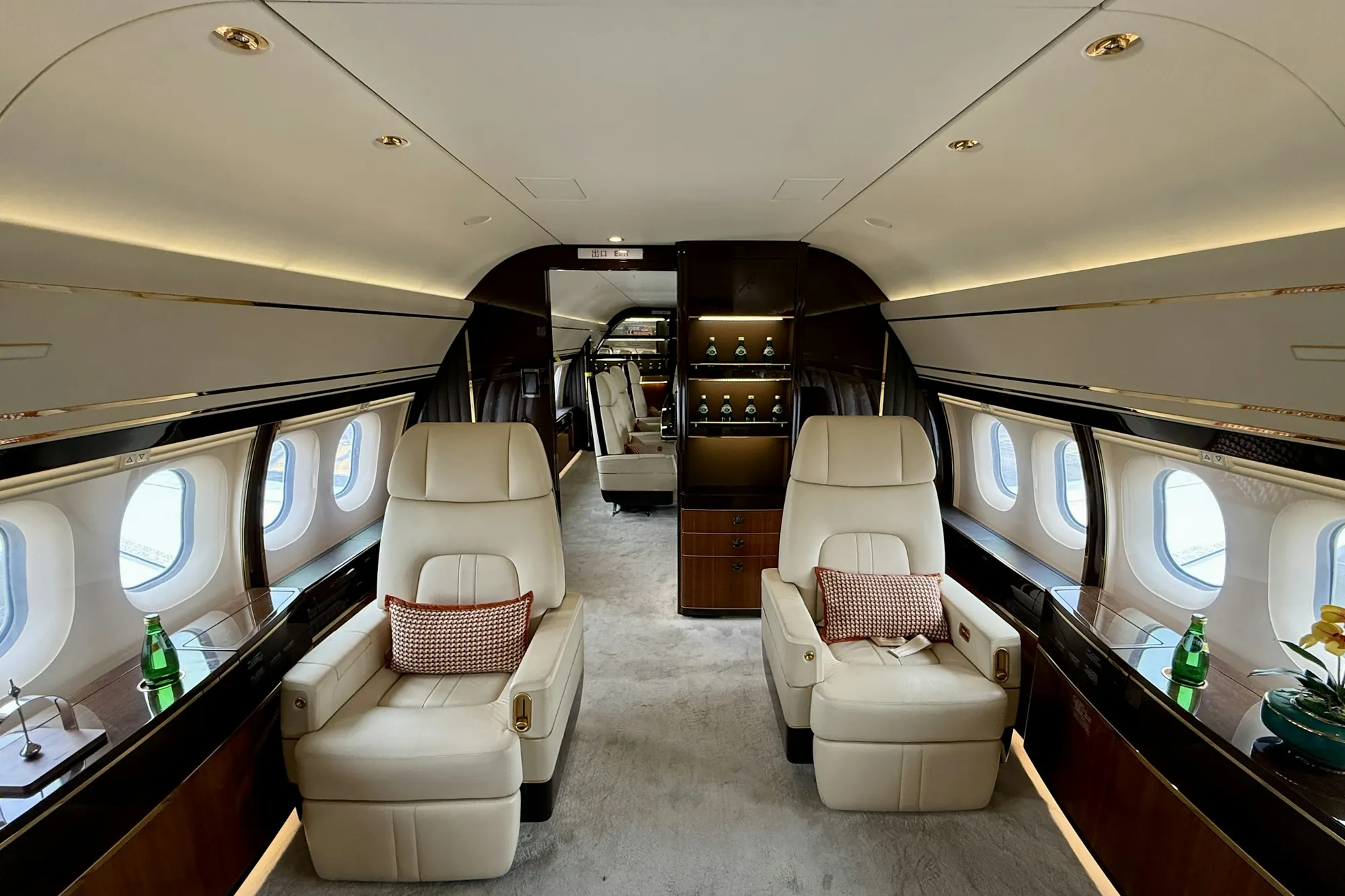
London to Dubai is one of the classic long sectors of business aviation: long enough to rule out small jets, short enough that the largest aircraft are a choice rather than a necessity. The right aircraft depends on how many people are travelling, how they want to spend seven hours, and how the budget compares with the comfort on offer.
The distance in numbers
The great-circle distance from the main London business airports to Dubai is about 2,950 to 2,990 nautical miles, depending on the pair. Real routes are longer, because aircraft follow airways and avoid restricted airspace, and winds add or subtract time. In practice the flight takes about six and a half to seven and a half hours, with the eastbound leg usually the quicker of the two.
Super-midsize: the efficient choice
Super-midsize jets such as the Challenger 350, Citation Longitude and Praetor 600 have typical ranges of 3,200 to 4,000 nautical miles. That covers London to Dubai nonstop with most loads. The shorter-range models in the class can need a fuel stop flying west against strong winter headwinds with a full cabin, which the operator assesses before confirming. Cabins seat eight to ten, with a near stand-up height of about 6 feet.
At typical US market rates of $6,500–9,500 an hour, seven hours of flight time comes to roughly $45,500–66,500 before taxes, fees and any positioning.
Large cabin: room to spare
Large cabin jets such as the Gulfstream G450, Challenger 650 and Falcon 2000LXS reach 4,000 to 4,300 nautical miles, so London to Dubai is well within range in both directions. Cabins stand 6.2 feet or more and seat ten to sixteen, usually in two or three zones, which makes a real difference on a flight of this length: room to work, eat properly and sleep.
At $8,500–13,000 an hour, seven hours is roughly $59,500–91,000 of flight time before taxes and fees.
Ultra long range: space and sleep
Ultra long range jets such as the Gulfstream G650ER and Global 7500, with ranges of 7,500 to 7,700 nautical miles, are far more aircraft than the distance needs. People choose them for the cabin: separate living and sleeping areas, more space per passenger and the quietest ride in business aviation. At $12,000–20,000 an hour or more, seven hours runs from roughly $84,000 to $140,000 and up.
Midsize and smaller: plan a stop
A midsize jet such as the Citation XLS+ has a typical range of about 2,100 nautical miles, so London to Dubai needs one fuel stop, usually somewhere in the eastern Mediterranean or Turkey. The stop adds roughly an hour on the ground and some extra flying for the climb and descent, so the journey grows to eight and a half hours or more. Light jets need one or two stops. Both can make sense on a tight budget, but most travellers prefer the nonstop options for comfort.
| Category | Nonstop? | Seats | Cabin height | 7 hours of flight time |
|---|---|---|---|---|
| Midsize | One fuel stop | 7–9 | ~5.7 ft | plus stop; journey 8.5 h+ |
| Super-midsize | Yes, with most loads | 8–10 | ~6.0 ft | $45,500–66,500 |
| Large cabin | Yes | 10–16 | 6.2 ft+ | $59,500–91,000 |
| Ultra long range | Yes | 13–19 | 6.2 ft+ | $84,000–140,000+ |
Flight time only, at typical US market hourly ranges; European and Gulf operators price in their own currencies. Excludes taxes, fees and positioning.
One-way trips and the empty return
A London-based aircraft that flies you to Dubai must either wait for your return, find another trip home, or fly back empty. If it would return empty, a one-way quote usually includes that cost, which is why a one-way price can sit close to a return. Aircraft based in the Gulf, or already scheduled to come back to Europe, can price the same route very differently. Empty legs on this route do appear, at a fraction of the usual price, but their dates and times are fixed.
Comfort over seven hours
On a sector this long, small differences in the cabin add up. Ask about seats that recline flat or a divan that becomes a bed, a proper enclosed lavatory, connectivity over the Gulf, and catering. Larger jets usually carry a cabin attendant as well as two pilots, and crews on this route plan their duty and rest limits around a long day. We list the cabin layout and the crew for every aircraft we quote.
Luggage on a long sector
A seven-hour flight needs a lot of fuel, and fuel and payload share the same weight allowance. On most nonstop jets that is no problem for normal luggage, but heavy cases, golf bags, skis or shopping on the way home can matter on smaller super-midsize aircraft, especially flying west against winter winds. Tell us roughly how many bags you will carry and anything bulky, and the operator will confirm the aircraft can take it all nonstop.
Crew and a long day
Crews work within legal limits on duty time and rest. A London to Dubai flight fits comfortably within a normal duty day, but a same-day return, or a long wait before departure, may need a second crew or an overnight stop. When we quote a return trip with only a short stay in Dubai, we confirm with the operator how the crew’s rest will be handled and show any cost for it.
How we narrow it down
Tell us how many are travelling, how much luggage you’ll carry and how you would like to spend the flight. We will quote the aircraft that suit, usually a super-midsize and a large cabin option side by side, each from a certificated operator and with an all-in price.